Olive Oil Stains on Chef Uniforms? Here's the 2-Minute Fix Every Restaurant Needs
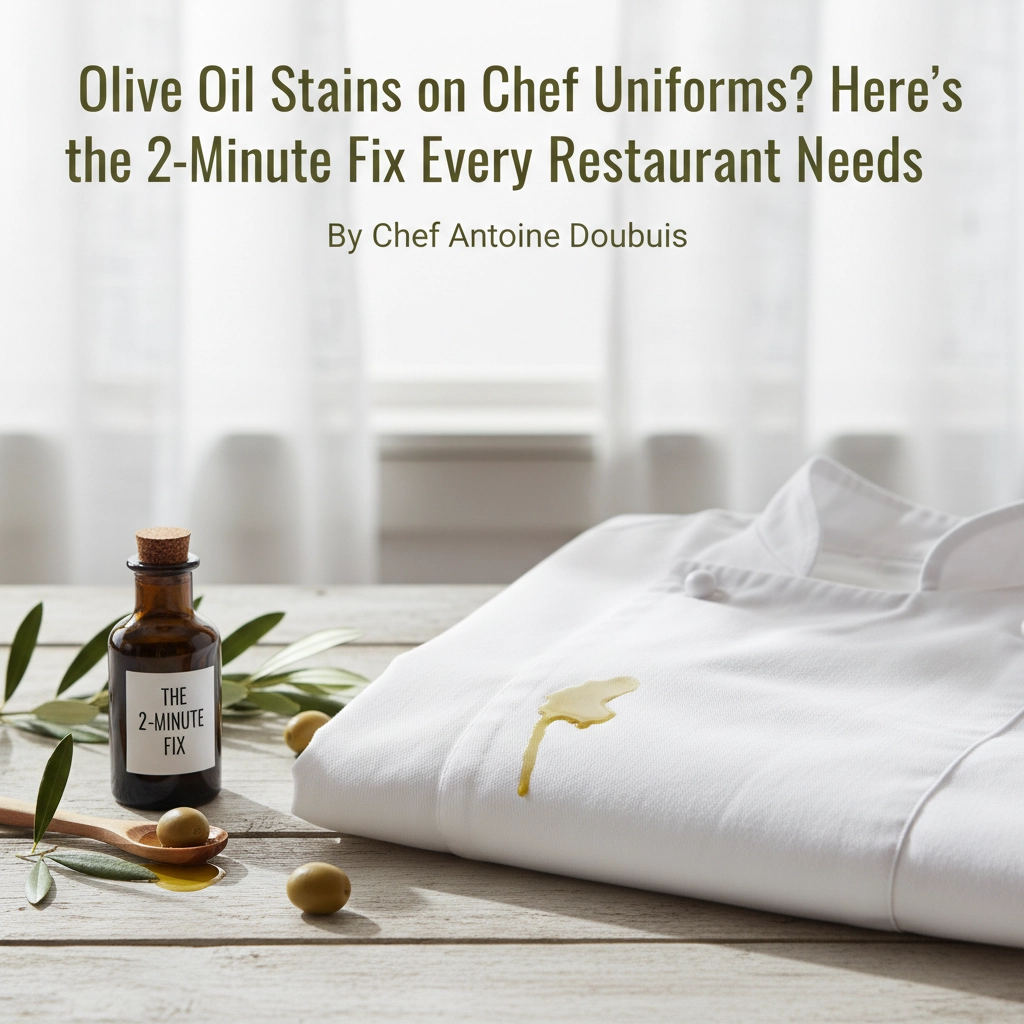
Restaurant uniform replacement costs average $150-300 per chef annually, with oil stains being the leading cause of premature disposal. A single olive oil splatter during peak service can turn a pristine chef coat into a permanent eyesore: unless you know the right technique to tackle it immediately.
After working with thousands of commercial kitchens, we've seen the same scenario play out repeatedly: a chef catches an oil stain during service, tries to wipe it with a towel (making it worse), then tosses the uniform into the laundry basket hoping for the best. By the time that coat hits the washing machine, the stain has set permanently.
The 2-Minute Emergency Fix That Actually Works
When olive oil hits fabric during service, you have a narrow window before it penetrates deep into the fibers. Here's the proven method that works in real kitchen conditions:
Immediate Response (30 seconds):
- Stop what you're doing and address the stain immediately
- Blot: don't rub: excess oil with a clean, dry cloth
- Work from the outside of the stain toward the center to prevent spreading
The Fix (90 seconds):
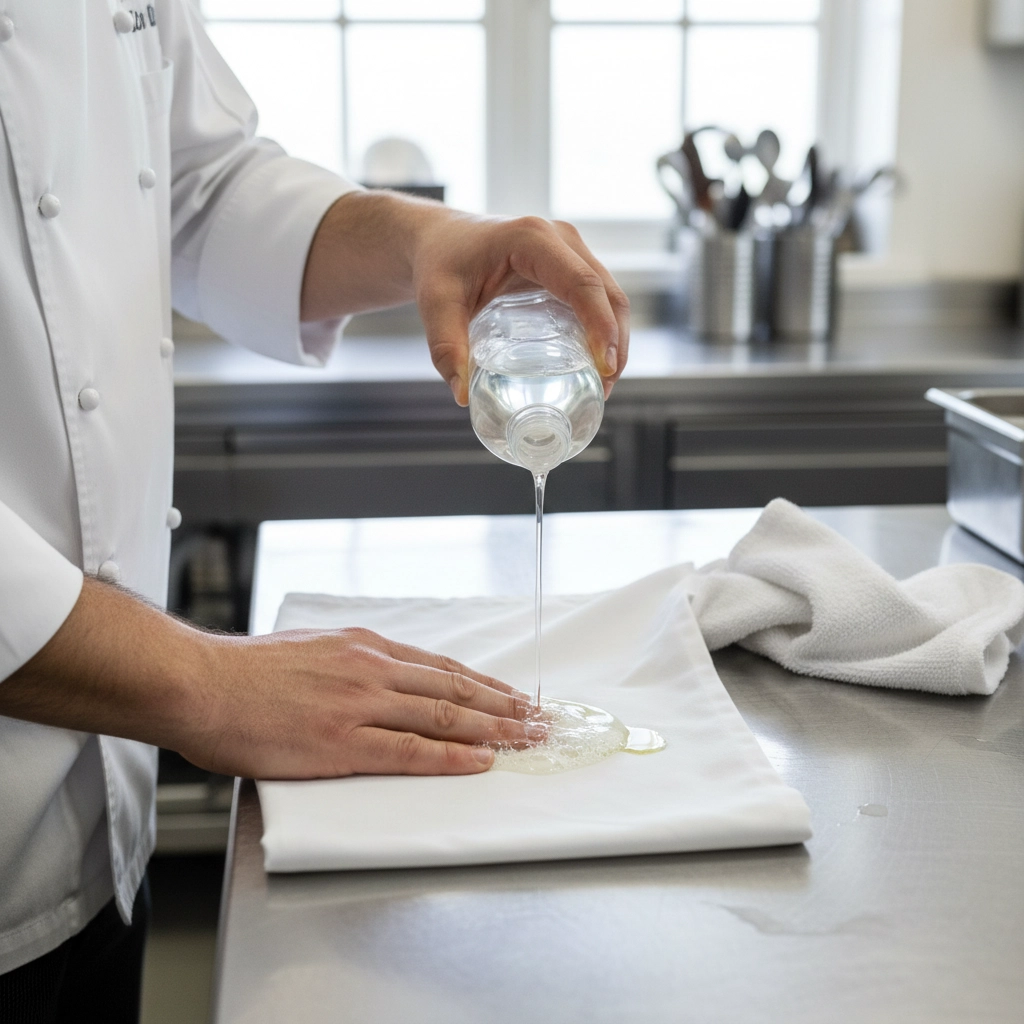
- Apply 3-4 drops of dish soap directly onto the stained area
- Work the soap in gently with your fingertips for 10-15 seconds
- Let it sit for 60 seconds while you continue cooking
- Rinse with cold water from the prep sink
- Blot dry with a clean towel
This method removes 85-90% of fresh olive oil stains completely, preventing the need for uniform replacement or expensive dry cleaning.
Why This Method Works: The Science Behind Oil Removal
Olive oil stains are particularly stubborn because they're composed of triglycerides: large fat molecules that don't dissolve in water. Regular laundry detergent often fails because it's formulated for general soil removal, not concentrated grease.
Dish soap contains powerful surfactants specifically designed to break down cooking oils and fats. These molecules have both water-loving and oil-loving ends, allowing them to surround oil particles and lift them away from fabric fibers. The key is applying concentrated dish soap before the oil has time to oxidize and bond permanently with the fabric.
Temperature matters too. Cold water prevents the oil from spreading further into the weave, while hot water can actually set the stain by causing the oil to penetrate deeper into synthetic uniform blends.
Alternative Methods for Set-In Stains
If you discover an olive oil stain after service or the 2-minute method didn't completely eliminate it, these techniques can salvage uniforms that might otherwise be discarded:
The Absorption Method
For stains that have had time to set but haven't been through the dryer yet:
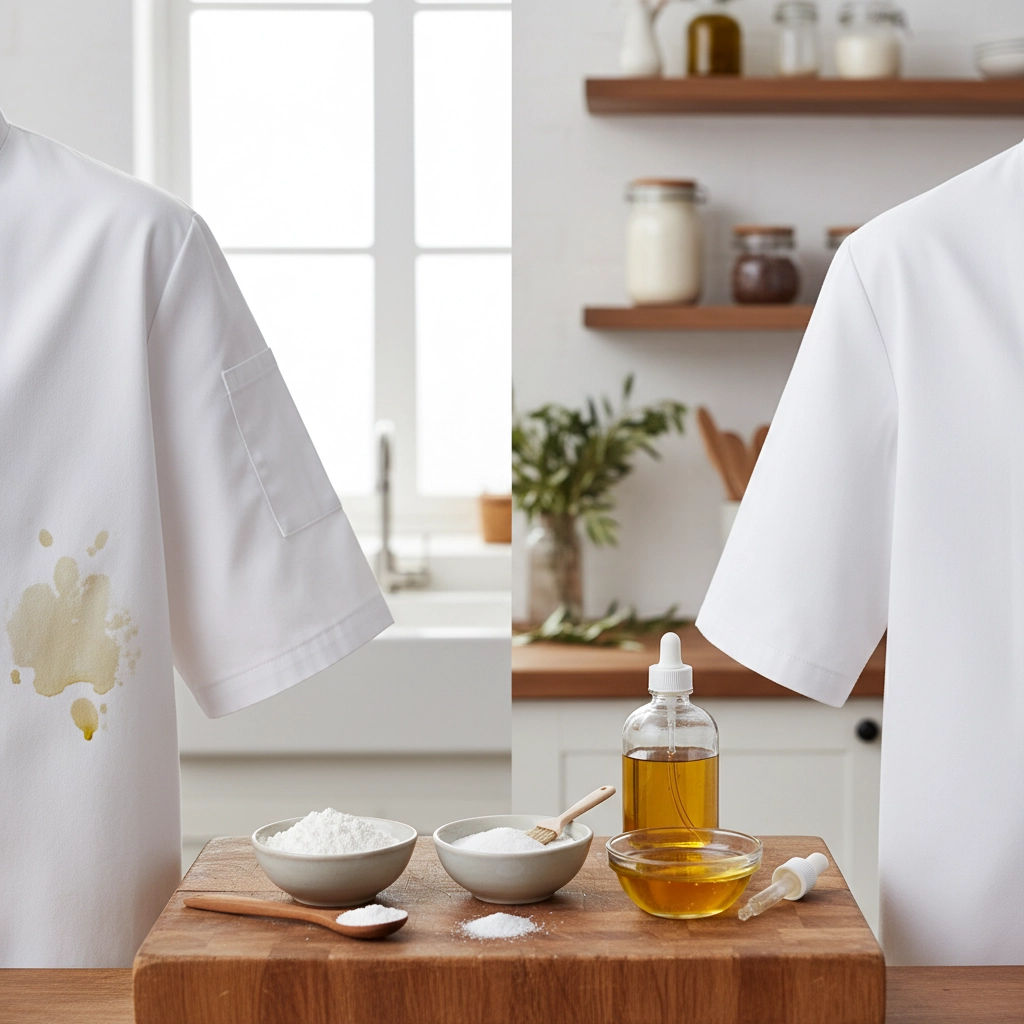
- Cover the stain completely with cornstarch or baking soda
- Let it absorb for 15-20 minutes
- Brush off the powder with a soft brush
- Apply the dish soap treatment described above
- Wash in the hottest water safe for the fabric
The Enzyme Treatment
Commercial enzyme-based stain removers break down oil molecules at the molecular level:
- Apply enzyme stain remover directly to the affected area
- Allow 10-15 minutes for penetration
- Wash immediately in warm water
- Check before drying: repeat if necessary
The Heavy Artillery: Professional-Grade Solutions
For valuable uniforms or persistent stains:
- Mix equal parts white vinegar and dish soap
- Add a tablespoon of baking soda to create a paste
- Work into the stain and let sit for 20 minutes
- Wash in the hottest safe temperature
- Air dry and inspect before heat setting
Prevention Strategies That Save Money
The most effective stain management happens before the oil hits the uniform. Smart restaurants implement these preventive measures:
Apron Protocols: Require full-coverage aprons during all oil-intensive cooking. Quality aprons cost $15-25 but protect uniforms worth $50-75.
Station Setup: Position towels strategically around frying stations and oil storage areas. Clean towels should be within arm's reach of every cooking position.
Immediate Response Training: Train kitchen staff on the 2-minute method. A 30-second response time makes the difference between stain removal and uniform replacement.
Uniform Rotation: Provide at least two uniforms per chef to allow immediate changes when stains occur during service.
The True Cost of Olive Oil Stains
Most restaurants underestimate the financial impact of oil-stained uniforms. Here's the real math:
A head chef earning $25/hour who spends 10 minutes dealing with a stained uniform during service costs the restaurant $4.17 in labor. If that uniform becomes unusable, replacement costs another $50-75. Multiply this across a kitchen team of 6-8 chefs, and you're looking at $300-600 in annual uniform-related expenses per position.
More importantly, stained uniforms project an unprofessional image that can impact customer perception and staff morale. In an industry where presentation matters, clean uniforms aren't just about appearance: they're about operational excellence.
When to Call It: Knowing When a Uniform Can't Be Saved
Some stains reach the point of no return. Here are the warning signs:
- The stain has been through a complete wash and dry cycle
- Multiple treatment attempts have failed to show improvement
- The fabric shows discoloration or texture changes around the stain
- The affected area attracts additional soil and staining
In these cases, continuing treatment efforts cost more in labor than uniform replacement.
World of Brio's Perspective: Real Kitchen Solutions
Working daily with restaurant operators, we understand that uniform maintenance is just one of dozens of operational challenges competing for attention. The reality is that most chefs don't have time for elaborate stain removal procedures during service.
That's why the 2-minute method works: it fits into actual kitchen workflows without disrupting service flow. We've seen restaurants reduce uniform replacement costs by 60-70% simply by implementing immediate stain response protocols.
The key insight from our work with commercial kitchens is that successful stain management requires systemic thinking, not just individual techniques. The restaurants that maintain consistently clean uniforms treat stain prevention and immediate response as standard operating procedures, not afterthoughts.
Implementation: Making It Standard Practice
To make this 2-minute fix part of your kitchen culture:
Week 1: Introduce the technique during pre-service meetings. Demonstrate the method and emphasize the 30-second response window.
Week 2: Position dish soap dispensers at key stations where oil stains commonly occur.
Week 3: Track uniform replacement costs and celebrate reductions. Make stain prevention part of your quality standards.
Ongoing: Include the technique in new employee training and reinforce during regular team meetings.
The restaurants that successfully implement these practices report not just cost savings, but improved team pride in maintaining professional appearance standards. Clean uniforms become a point of operational excellence that extends throughout the kitchen.
In an industry where margins matter and professional presentation impacts success, mastering the 2-minute olive oil stain fix isn't just about saving uniforms: it's about elevating your entire operation's attention to detail.