Olive Oil Flash Point: Myths and Truths
Walk into any commercial kitchen and you'll hear heated debates about olive oil safety. "Don't use extra virgin for sautéing: it'll catch fire!" one chef warns. "Olive oil is dangerous at high heat," another claims. These misconceptions cost foodservice operators money and limit menu creativity. In reality, olive oil's thermal properties are widely misunderstood, creating unnecessary kitchen anxiety and poor purchasing decisions.
The confusion stems from conflating three distinct measurements: flash point, smoke point, and ignition temperature. Understanding these differences isn't just academic: it directly impacts your kitchen's efficiency, safety protocols, and ingredient costs.
What Flash Point Actually Means in Professional Kitchens
Flash point is the precise temperature at which a liquid produces enough vapor to ignite when exposed to an open flame or spark. For olive oil, this occurs around 410°F: a temperature that's practically impossible to reach during normal cooking operations.
To put this in perspective, most commercial deep fryers operate between 325-375°F, while sautéing rarely exceeds 350°F. Even aggressive searing typically stays below 400°F. The gap between your cooking temperatures and olive oil's flash point provides a substantial safety margin.
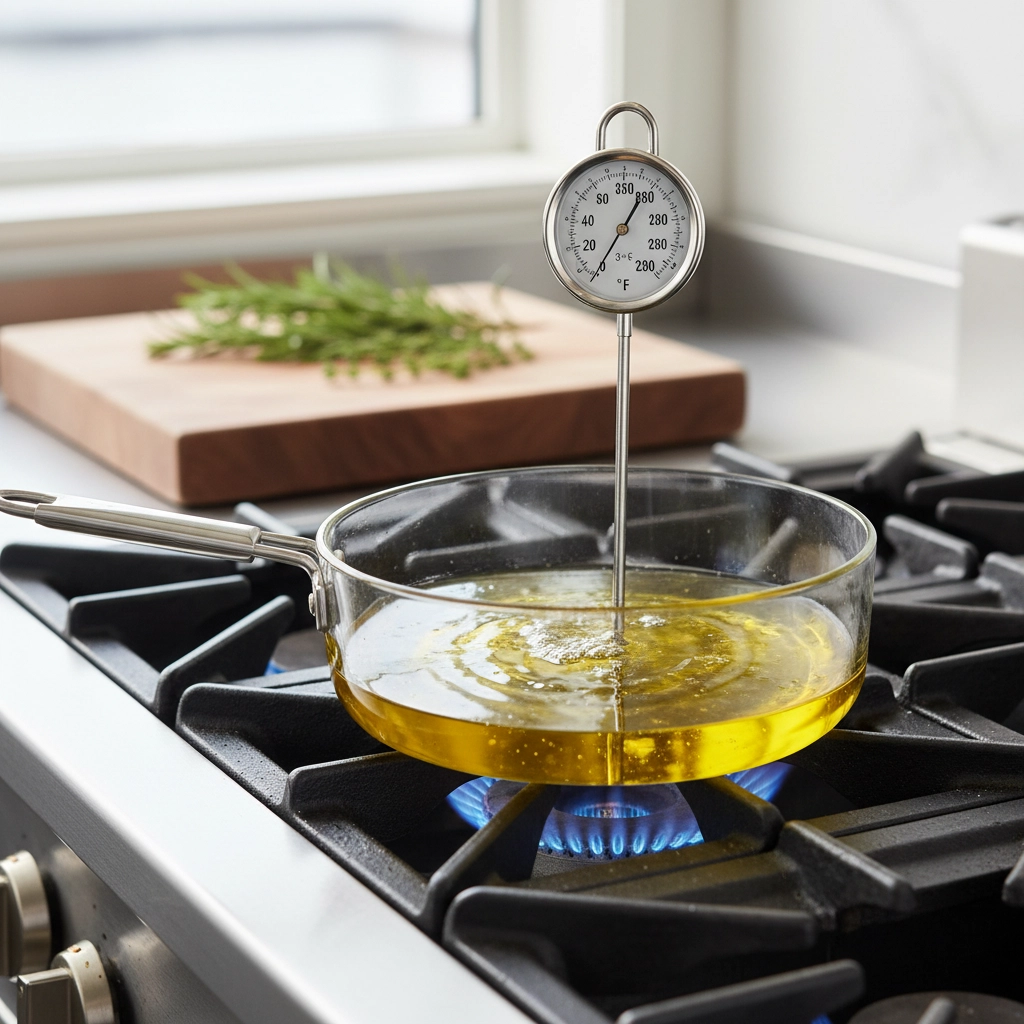
This differs fundamentally from smoke point: the temperature where oil begins producing visible smoke. While smoke point affects flavor and indicates oil degradation, it has no bearing on fire safety. Yet many operators mistakenly treat smoke point as a danger threshold.
Debunking the Most Persistent Olive Oil Myths
Myth 1: "Olive Oil is Flammable in Commercial Kitchens"
False. According to OSHA classification standards, substances must have flash points below 100°F to qualify as flammable. Olive oil's 410°F flash point places it firmly in the "combustible" category: meaning it requires extreme heat to ignite, not routine cooking temperatures.
This distinction matters for insurance, safety training, and storage protocols. Unlike truly flammable substances that require special handling, olive oil can be stored and used following standard kitchen safety procedures.
Myth 2: "Extra Virgin Olive Oil is More Dangerous Than Refined Oil"
Misleading. While different olive oil grades have slightly varying flash points, the differences are minimal:
- Regular refined olive oil: 390-470°F flash point
- Virgin olive oil: ~410°F flash point
- High-quality extra virgin: ~405°F flash point
- Standard extra virgin: ~374°F flash point
Even the lowest figure (374°F) remains well above any temperature your kitchen equipment reaches during normal operation. The variation between grades creates no meaningful safety difference.
Myth 3: "Smoke Point Determines Cooking Safety"
Partially false. Recent culinary research reveals that smoke point poorly predicts oil stability under heat. The actual factors determining an oil's high-heat performance are:
- Polyunsaturated fat percentage (lower is better for stability)
- Degree of refinement (less refined oils often perform better despite lower smoke points)
Extra virgin olive oil, despite its relatively low smoke point, demonstrates excellent stability when heated due to its low polyunsaturated fat content and natural antioxidants.

The Science Behind Olive Oil's Thermal Performance
Temperature Specifications by Grade
Understanding the precise thermal thresholds helps optimize your cooking methods:
Extra Virgin Olive Oil:
- Smoke point: 350-430°F
- Flash point: 374-405°F (depending on quality)
- Optimal cooking range: Up to 350°F
Refined Olive Oil:
- Smoke point: 390-470°F
- Flash point: 390-470°F
- Optimal cooking range: Up to 400°F
These ranges overlap significantly with your equipment's operating temperatures, providing flexibility in application without safety concerns.
Why Flash Point Matters More Than Smoke Point
Flash point represents the actual safety threshold: the temperature where fire risk begins. Smoke point, while important for flavor considerations, doesn't indicate danger. Oil producing smoke isn't about to combust; it's simply degrading in quality.
This understanding changes how you approach high-heat cooking. Seeing smoke means adjusting temperature for optimal results, not evacuating the kitchen for safety reasons.
Practical Implications for Foodservice Operations
Equipment Temperature Reality Check
Most commercial kitchen equipment operates well below olive oil's flash point:
- Convection ovens: 200-500°F (controllable, food temperature stays lower)
- Deep fryers: 325-375°F
- Sauté pans: 300-350°F typical use
- Griddles: 350-400°F surface temperature
Even when equipment reaches its maximum temperature, the oil temperature inside food remains significantly lower due to heat transfer and evaporation cooling effects.
Cost Considerations and Menu Flexibility
Understanding olive oil's true thermal capabilities opens menu possibilities while potentially reducing costs. Instead of purchasing multiple specialty high-heat oils, many operations can rely on olive oil for broader applications than previously assumed.
Extra virgin olive oil works effectively for:
- Sautéing vegetables and proteins
- Light frying applications
- Oven roasting up to 400°F
- Finishing dishes (obvious application)
Reserve higher flash point oils for:
- Deep frying (primarily for flavor/cost reasons)
- Extremely high-heat wok cooking
- Applications specifically requiring neutral flavor
Storage and Handling Protocols
Olive oil's combustible (not flammable) classification means standard commercial kitchen storage applies:
- Keep away from direct heat sources
- Store in cool, dry locations
- Maintain proper ventilation around cooking areas
- Follow standard fire suppression protocols
No special flammable liquid storage requirements apply, simplifying inventory management and reducing compliance complexity.
Safety Recommendations for Professional Kitchens
Temperature Monitoring Best Practices
While olive oil's flash point provides substantial safety margins, professional temperature monitoring improves both safety and quality outcomes:
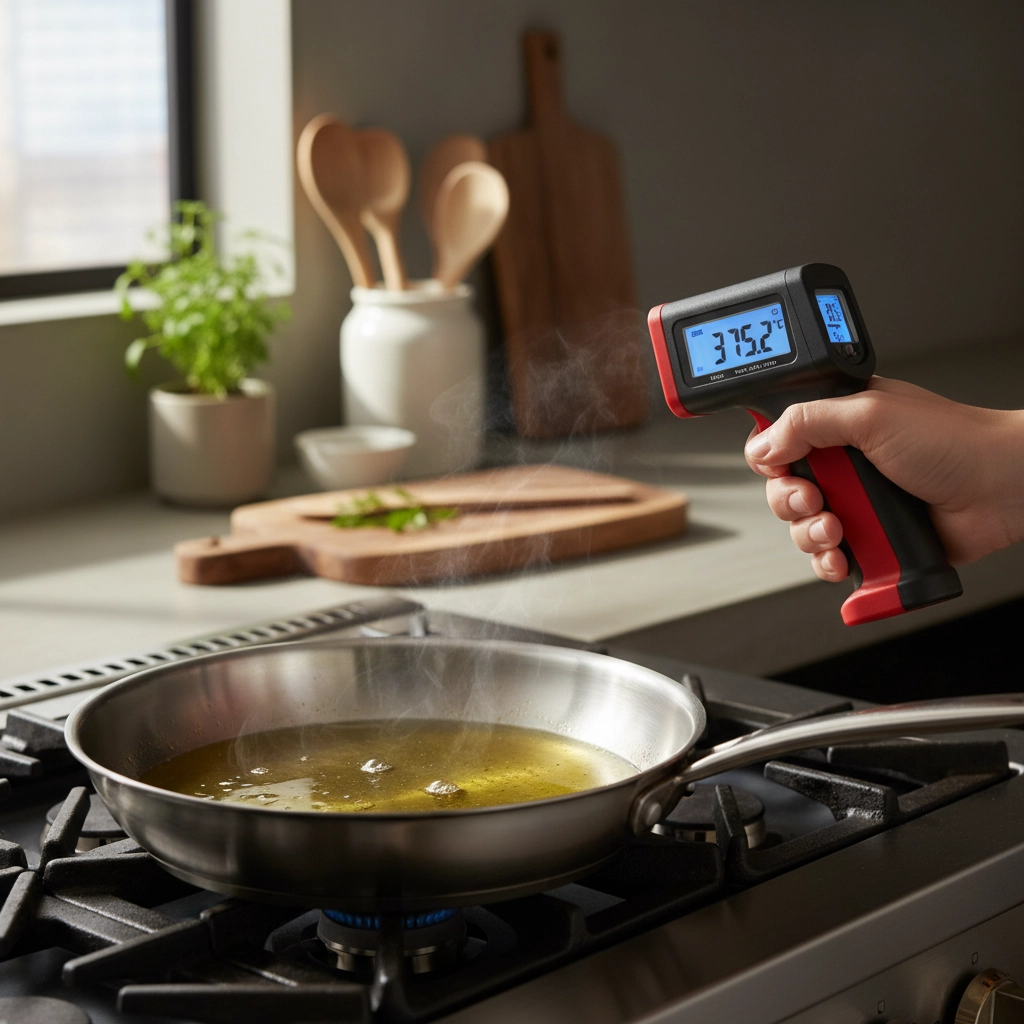
- Use infrared thermometers to verify actual oil temperatures rather than relying on equipment settings
- Monitor for smoke production as a quality indicator, not safety warning
- Implement temperature logging for consistency across shifts
- Train staff on the difference between smoke point and flash point
Emergency Procedures
Despite olive oil's high flash point, maintain standard kitchen fire safety protocols:
- Keep Class K fire extinguishers accessible
- Never use water on oil fires
- Turn off heat sources immediately if overheating occurs
- Allow overheated oil to cool naturally rather than attempting rapid cooling
Quality Control Integration

Use thermal understanding to optimize quality alongside safety:
- Track oil degradation through smoke production patterns
- Replace oils based on performance, not arbitrary safety fears
- Adjust cooking techniques to maximize oil longevity
- Document temperature logs for consistency training
The World of Brio Perspective on Oil Selection
Understanding thermal properties helps foodservice operators make informed purchasing decisions. Rather than avoiding certain oils due to misconceptions, focus on matching oil characteristics to specific applications.
Our experience supplying commercial kitchens reveals that many operators overspend on specialized oils for applications where standard olive oil performs adequately. The key lies in understanding your actual cooking temperatures versus theoretical safety limits.
For operations questioning their current oil strategy, we recommend conducting a kitchen temperature audit. Document your actual cooking temperatures across different applications, then compare against oil specifications. This data-driven approach typically reveals opportunities for both cost savings and menu expansion.
Moving Forward with Confidence
Olive oil's 410°F flash point creates a substantial safety buffer for virtually all commercial cooking applications. The persistent myths surrounding olive oil safety stem from confusion between different thermal measurements and outdated information.
Focus on these actionable takeaways:
- Smoke point affects flavor, not safety
- Flash point (410°F) remains well above normal cooking temperatures
- Different olive oil grades offer similar safety profiles
- Temperature monitoring improves both quality and efficiency
- Understanding thermal properties enables better purchasing decisions
By separating myths from scientific facts, foodservice operators gain menu flexibility while maintaining safety standards. The result? More cost-effective ingredient utilization without compromising kitchen safety protocols.
For additional insights on optimizing your oil selection strategy, explore our comprehensive guide to mastering olive oil smoke points and discover how proper oil knowledge impacts your bottom line.