Safflower vs Sunflower Oil: The Truth About Which Is Really Better for Your Budget and Health
Let's cut through the marketing noise and get straight to the facts. If you're running a commercial kitchen or managing food costs, you've probably wondered whether safflower or sunflower oil is the smarter choice. Both oils dominate the neutral cooking oil market, but the differences between them can significantly impact your bottom line and menu quality.
The cooking oil market has seen dramatic shifts in recent years, with health-conscious consumers driving demand for oils with better nutritional profiles. Meanwhile, food service operators are balancing cost pressures with the need for versatile, high-performing oils. Understanding the real differences between safflower and sunflower oil isn't just about nutrition labels: it's about making informed decisions that affect your operation's profitability and your customers' satisfaction.
The Safflower Oil Breakdown: What You're Really Getting
Safflower oil comes from seeds of the safflower plant, which has been cultivated for over 4,000 years. But here's what matters for your kitchen: this oil delivers a smoke point of approximately 450°F (232°C), making it one of the more heat-stable options for high-temperature cooking.
The nutritional profile centers around linoleic acid, an omega-6 fatty acid that comprises the majority of the oil's composition. Safflower oil contains notably lower levels of saturated fats compared to sunflower oil, which aligns with current dietary guidelines emphasizing reduced saturated fat intake.
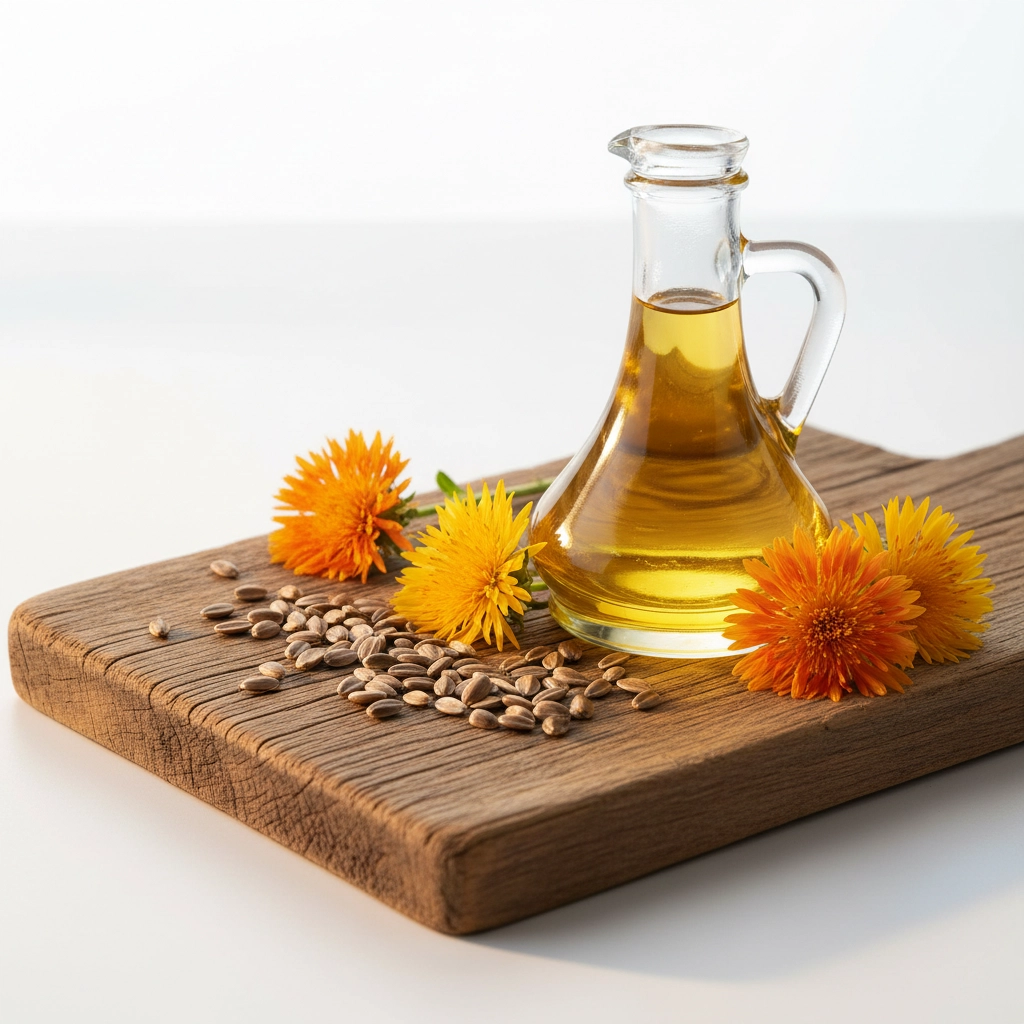
From a health perspective, safflower oil offers some unique advantages. Research indicates it has anti-inflammatory properties and may help improve blood sugar levels: particularly relevant for operations serving health-conscious customers or managing dietary restrictions. The oil also contains vitamin E, though in lower concentrations than sunflower oil.
Production and sustainability often favor safflower oil, as it's frequently produced using more environmentally conscious farming practices compared to large-scale sunflower operations.
However, safflower oil isn't perfect. The standard linoleic variety offers less versatility than sunflower oil for diverse cooking applications, and its vitamin E content, while present, doesn't match sunflower oil's levels.
Sunflower Oil: The Versatile Performer
Sunflower oil brings significant advantages, starting with its higher vitamin E content: substantially more than safflower oil. This matters for both nutritional value and shelf stability, as vitamin E acts as a natural antioxidant.
The real strength of sunflower oil lies in its variety of formulations. You can choose from high-linoleic, high-oleic, and mid-oleic varieties, each optimized for different applications and dietary goals. High-oleic sunflower oil, in particular, offers excellent cardiovascular health benefits due to its higher monounsaturated fat content.
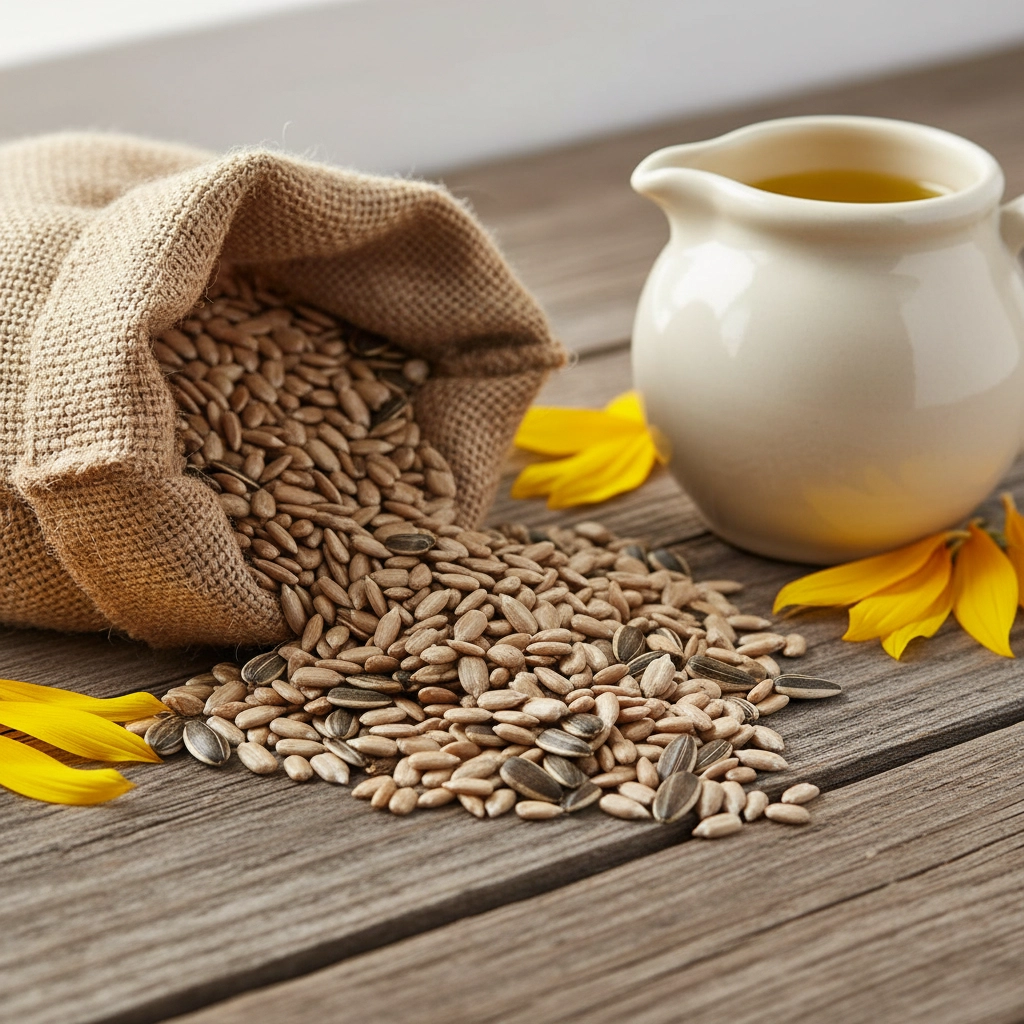
With a smoke point around 440°F, sunflower oil handles most cooking methods effectively, though it falls slightly short of safflower oil for the highest-heat applications. The neutral flavor profile makes it adaptable across diverse menu items, from baking to frying to salad dressings.
Cost advantage becomes clear with sunflower oil's standard linoleic variety, which is significantly less expensive than premium oil options. This makes it attractive for high-volume operations where ingredient costs directly impact profitability.
The trade-offs include higher saturated fat content compared to safflower oil and greater susceptibility to rancidity in the cheaper linoleic varieties. The oil also lacks safflower oil's specific anti-inflammatory and blood sugar benefits.
Head-to-Head Comparison: The Numbers That Matter
| Factor | Safflower Oil | Sunflower Oil |
|---|---|---|
| Smoke Point | 450°F (232°C) | 440°F |
| Saturated Fat Content | Lower | Higher |
| Vitamin E Content | Lower | Higher |
| Anti-inflammatory Properties | Strong | Standard |
| Blood Sugar Impact | Beneficial | Neutral |
| Price (Premium Varieties) | Similar to high-oleic sunflower | Similar to high-oleic safflower |
| Price (Standard Varieties) | Less common/more expensive | Significantly cheaper linoleic variety available |
| Heat Stability | Excellent | Very good |
| Flavor Profile | Neutral | Neutral |
| Shelf Stability | Good | Variable by type |
Budget Reality: Where Your Money Goes
The budget conversation depends entirely on which grade you're considering. Standard linoleic sunflower oil dominates the economy segment, with prices significantly lower than other neutral cooking oils. For high-volume operations where ingredient costs make or break profitability, this price advantage is substantial.

Premium oil pricing tells a different story. High-oleic versions of both safflower and sunflower oil carry similar price points, meaning your choice should be based on performance characteristics rather than cost alone.
Consider your usage patterns carefully. If you're doing high-volume frying where oil replacement frequency matters, safflower's higher smoke point could reduce replacement costs despite similar upfront pricing. Conversely, if you need versatility across multiple cooking methods, sunflower oil's variety of formulations might offer better value.
Hidden costs also factor in. Safflower oil's better stability at high temperatures can extend oil life in deep fryers, while sunflower oil's higher vitamin E content provides natural preservation benefits for stored applications.
Health Impact: Beyond the Marketing Claims
Cardiovascular health considerations favor both oils over solid fats, but with important distinctions. Safflower oil's lower saturated fat content aligns more closely with heart-healthy dietary patterns, while high-oleic sunflower oil provides monounsaturated fats that actively support cardiovascular health.
Anti-inflammatory benefits clearly favor safflower oil, with documented effects that could matter for customers managing inflammatory conditions or seeking functional food benefits. This positions safflower as a premium option for health-focused menu items.
Blood sugar management gives safflower oil another edge, particularly relevant as diabetes rates continue climbing and customers become more conscious of glycemic impact. This benefit extends beyond direct health effects to potential marketing advantages for health-conscious establishments.
Vitamin E content strongly favors sunflower oil, providing both nutritional value and natural preservation benefits. This matters for operations emphasizing nutrient density or seeking cleaner label solutions.
Practical Applications for Food Service
High-heat cooking operations should lean toward safflower oil. That extra 10°F in smoke point translates to better oil stability during continuous frying operations, potentially extending oil life and maintaining food quality during peak service periods.
Diverse menu requirements favor sunflower oil's versatility. The ability to choose specific formulations: high-oleic for heart-healthy applications, mid-oleic for balance, or linoleic for cost-effectiveness: provides operational flexibility that single-formulation safflower oil can't match.

Health-focused positioning benefits from safflower oil's anti-inflammatory and blood sugar advantages. If your brand emphasizes wellness or caters to health-conscious demographics, these functional benefits provide legitimate marketing advantages.
Cost-sensitive operations will find sunflower oil's economy grades unbeatable. The price difference on standard linoleic sunflower oil can significantly impact food costs in high-volume settings.
The Bottom Line: Making the Right Choice
The "better" oil depends entirely on your specific operational needs and customer base. For cost-conscious operations prioritizing affordability, standard linoleic sunflower oil remains unbeatable on price.
For premium health-focused applications, safflower oil's anti-inflammatory properties and blood sugar benefits justify higher costs, especially if you're targeting wellness-conscious customers or promoting functional food benefits.
For maximum versatility, sunflower oil's multiple formulations provide operational flexibility that single-variety safflower oil can't match. You can optimize oil choice by application rather than using one oil for everything.
For high-temperature cooking, safflower oil's superior smoke point provides tangible performance advantages that can extend oil life and maintain food quality during demanding cooking operations.
At World of Brio, we've seen both oils perform successfully in commercial applications. The key is matching oil characteristics to your specific operational requirements rather than assuming one oil fits all applications. Consider your cooking methods, customer expectations, budget constraints, and menu positioning when making this choice.
The truth is, both safflower and sunflower oil can excel in the right applications. Success comes from understanding these differences and choosing strategically rather than defaulting to whatever's cheapest or most familiar.